Beginner’s Guide to Candlelit Meditation and Breathwork
Candlelit meditation combined with simple breathwork is one of the most accessible ways to calm the nervous system, soften anxiety, and gently deepen self-awareness. You don’t need prior experience, special gear, or complex techniques—just a candle, a quiet-ish space, and a few minutes of sincere attention.
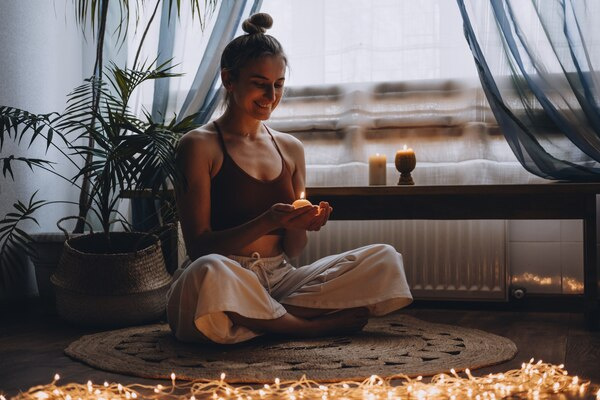
This guide will walk you step by step through how to prepare, how to breathe, how to focus on the candle flame, and what to do with common distractions and challenges.
1. Why Use a Candle and the Breath?
Meditation can feel abstract if you’re told simply to “focus on your mind.” A candle and your breathing give you two concrete anchors:
- The candle flame engages your vision and creates a warm, soothing focal point.
- The breath anchors you in your body, helping regulate your nervous system.
Together, they make meditation more tangible and beginner‑friendly.
Benefits you may notice
- Reduced stress and anxiety
- Improved focus and emotional steadiness
- Better sleep quality
- Increased body awareness and relaxation
- A gentle sense of presence and clarity
You don’t need to chase these benefits during practice; they tend to develop gradually as a side effect of regular sessions.
2. Setting Up Your Space
A little preparation goes a long way. Aim for a setting that feels safe, uncluttered, and supportive of relaxation.
Choosing a candle
- Type: Unscented or lightly scented. Strong fragrances can be distracting or irritating.
- Size: A small pillar or jar candle is ideal; tea lights work too.
- Color: Any color you find soothing; many people prefer white, cream, or soft colors.
- Stability: Place it in a sturdy, non-flammable holder that won’t tip over.
Safety first
- Place the candle on a stable, flat surface, away from curtains, books, and other flammables.
- Keep it out of reach of children and pets.
- Never leave it burning unattended.
- Avoid practicing if you are so tired that you might fall asleep sitting up near the flame.
Lighting and environment
- Dim or turn off electric lights so the flame stands out without straining your eyes.
- Reduce noise as much as possible: silence phones, close doors, lower music or background TV.
- Room temperature should feel comfortable; if you’re cold or cramped, it’s hard to relax.
Positioning the candle
- Place the candle at eye level or slightly below, about an arm’s length away.
- The flame should be easy to gaze at without tilting your head up or down, or squinting.
3. Getting Comfortable: Posture and Seating
You don’t need a special meditation cushion unless you want one. Choose what helps you stay both relaxed and awake.
Options for sitting
- Chair: Sit toward the front of the chair, feet flat on the floor, hips level or slightly higher than knees.
- Cushion on the floor: Sit cross‑legged or in any stable position. You can place a cushion under your hips so your knees drop slightly below hip level.
- On the bed: If you must, sit against the headboard with a straight spine; avoid fully lying down to prevent falling asleep.
Basic posture
- Spine upright but not rigid, as if your head is gently lifted by a thread from above.
- Shoulders relaxed, chest open but soft.
- Hands resting on your thighs or in your lap.
- Jaw unclenched; face soft.
- Eyes open with a relaxed, gentle gaze on the flame (you can half-close your eyelids if that feels more comfortable).
The goal is a posture that feels alert yet at ease.
4. Basic Breathwork for Candlelit Meditation
There are many breathing techniques. As a beginner, it’s often best to keep things simple and non‑forceful.
Step 1: Start with natural breath
Before using any pattern:
- Sit comfortably and gaze at the candle flame.
- Notice your breath as it is, without changing it:
- Where do you feel it most clearly—nostrils, chest, or belly?
- Is it short, long, shallow, deep?
- Allow a minute or two to simply observe without judgment.
This helps you connect with your baseline state.
Step 2: Gentle lengthening of the exhale
A simple, effective starting practice is to slightly lengthen the exhalation:
- Inhale gently through the nose to a comfortable count of 4.
- Exhale through the nose (or softly through the mouth) to a count of 6.
- Keep the breath smooth and easy; avoid forcing air out.
- Continue for 2–5 minutes.
If counting distracts you, just aim for:
- Inhale: natural, easy
- Exhale: slightly slower, like a soft sigh
Longer exhalations activate the calming “rest and digest” response in your nervous system.
Step 3: Full yet soft belly breathing
Once you’re comfortable:
- As you inhale, allow the belly to gently expand like a balloon.
- As you exhale, let the belly soften and fall.
- Keep the chest and shoulders relatively relaxed; the movement is subtle but lower in the body.
This helps release shallow, upper‑chest breathing patterns linked to tension.
If at any time you feel dizzy, anxious, or uncomfortable, return to your natural, unforced breathing and pause any counting or techniques.
5. Focusing on the Candle Flame
The candle becomes a visual anchor that supports stillness and concentration.
How to gaze at the flame
- Let your eyes rest softly on the tip of the flame, where it meets the darkness.
- Don’t stare rigidly; allow your gaze to be gentle and slightly unfocused.
- Blink naturally. You don’t need to “freeze” your eyes.
You may notice:
- Subtle movements in the flame
- Colors shifting from blue at the base to yellow or orange at the tip
- Light reflections on nearby surfaces
Simply observe without analyzing or judging.
Combining breath and flame
Now bring breath and candle together:
- On each inhale, notice the brightness and shape of the flame.
- On each exhale, imagine any tension in your body softening and dissolving into the surrounding darkness.
- If helpful, silently say to yourself:
- Inhale: “Here”
- Exhale: “Now” or
- Inhale: “Breathing in”
- Exhale: “Breathing out”
Let the candle and your breath form a gentle rhythm: see the flame, feel the breath, release tension.
6. Handling Thoughts, Emotions, and Distractions
You will think during meditation. That is normal and not a sign of failure.
When thoughts arise
- Notice: “Thinking.”
- Gently return your attention to:
- The sensation of the breath, and
- The sight of the flame.
Do this without scolding yourself. Returning is the practice.
When emotions arise
Sometimes candlelit quietness brings up feelings—sadness, anxiety, or even joy.
- Acknowledge the emotion: “There is sadness,” or “There is worry.”
- Allow it to be present without pushing it away or amplifying it.
- Anchor again in:
- The grounded feeling of your body on the seat
- The steady rhythm of your breath
- The simple, steady presence of the flame
If an emotion feels overwhelming, open your eyes more fully, take a few deeper natural breaths, or even pause the practice for now.
Handling external distractions
You might hear traffic, neighbors, or household noises.
Instead of fighting them:
- Briefly note: “Hearing.”
- Let the sound be part of the background.
- Return your focus to the flame and your breathing.
Your goal is not perfect silence, but a steady relationship with whatever is happening.
7. A Simple Step‑by‑Step Practice (10–15 Minutes)
Use this as a beginner’s template:
- Prepare (1–2 minutes)
- Light the candle safely.
- Sit comfortably with the flame at eye level.
- Take a few natural breaths and mentally set a gentle intention, such as:
- “I’m here to relax and be present.”
- “I’m here to take care of my mind and body.”
- Body scan and softening (2–3 minutes)
- Starting from your face and neck, scan down through shoulders, chest, belly, hips, legs, and feet.
- On each exhale, consciously release a bit of tension from each area.
- Keep your gaze lightly on the flame.
- Breath focus (3–5 minutes)
- Practice either:
- Natural breathing with awareness, or
- Gentle 4‑count inhale and 6‑count exhale.
- Stay aware of how the flame looks on each inhale and exhale.
- Practice either:
- Open awareness (3–5 minutes)
- Keep the candle in your visual field.
- Loosen any strict control over the breath—let it return to its natural rhythm.
- Simply watch:
- The flame’s movements
- The flow of breath
- Sensations in the body
- When thoughts arise, note them lightly and return.
- Closing (1–2 minutes)
- Gently deepen your breath once or twice.
- Notice how you feel physically and emotionally, without judging it.
- Thank yourself for taking this time to practice.
- Carefully extinguish the candle.
Ending consciously helps your nervous system register the practice as a complete, safe experience.
8. Adjusting Practice Duration and Frequency
Meditation is more beneficial when done regularly, even for short periods, rather than occasionally for long stretches.
For beginners
- Start with 5–10 minutes per session.
- Practice 3–5 times per week, or daily if that feels comfortable.
- Increase duration gradually if you feel drawn to it.
Many people find a short candlelit session before bed or early in the morning especially helpful.
9. Common Challenges and How to Work with Them
“My mind won’t stop racing.”
- This is normal, especially when you first start.
- Shorten the session if necessary.
- Prioritize simple breath awareness and gentle exhale lengthening.
- Don’t aim for “no thoughts”; aim for repeatedly returning to flame and breath.
“My eyes get tired or watery.”
- Let your gaze soften; don’t stare.
- Try half‑closed eyes, with the flame still visible.
- Occasionally blink slowly and gently refocus.
If eye discomfort persists, alternate between eyes‑open and brief eyes‑closed periods.
“I feel restless or bored.”
- Acknowledge: “Restlessness is here.”
- Gently bring curiosity to the flame—its colors, movements, and shadows.
- Sometimes shorter, more frequent sessions help build tolerance for stillness.
“I get sleepy.”
- Practice earlier in the day or sit with a slightly more upright, alert posture.
- Let your inhalations be a little fuller to maintain wakefulness.
- If you’re extremely tired, consider a short nap first; fatigue can overpower any technique.
10. Simple Variations to Explore (When You’re Ready)
Once you’re comfortable with the basics, you can experiment:
- Affirmation on the exhale
- Inhale: notice the flame.
- Exhale: silently repeat something calming, such as “I am safe” or “Let go.”
- Counting breaths
- Inhale and exhale, then count “1.”
- Next breath, count “2,” up to 10, then start again at 1.
- Keep the flame in your gentle gaze as you count.
- Body-and-flame awareness
- Half your attention stays on the candle.
- Half gently scans your body for sensation, softening any tension with each exhale.
Move to variations only when the basic practice feels relatively stable and comfortable.
11. When Candlelit Meditation May Not Be Ideal
Consider alternatives if:
- You have respiratory issues triggered by smoke or candle fumes (use a flameless LED candle instead).
- You have visual sensitivity, migraines, or conditions that make focusing on light uncomfortable (try eyes‑closed breath meditation).
- You are extremely fatigued or on sedating medication (prioritize safety and avoid open flames).
You can always apply the same breathwork and focus techniques using a fixed point on the wall, a small object, or simply closed‑eye awareness.
12. Integrating the Calm into Daily Life
The deeper purpose of candlelit meditation and breathwork is not just to feel peaceful while sitting, but to bring that steadiness into everyday moments.
You can:
- Take three slow, conscious breaths before difficult conversations.
- Briefly recall the image of the candle flame when you feel stressed, using it as a mental anchor.
- Practice short 1–2 minute “micro‑meditations” during breaks, focusing only on your breathing.
Over time, these small habits train your nervous system to shift more easily from tension to calm.
Candlelit meditation and breathwork are fundamentally simple: sit, breathe, watch a flame, and gently return when your attention wanders. With regular practice, even a few minutes at a time, you’re likely to discover a quieter, steadier place within yourself that you can revisit whenever life feels overwhelming.